Manufactured in Titanium Grade 5 ELI (Extra Low Interstitials)
Simplicity and precision...
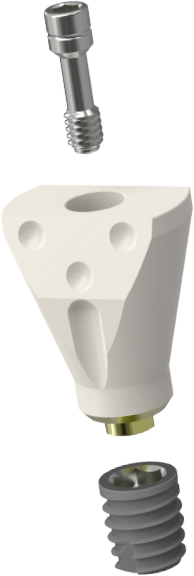
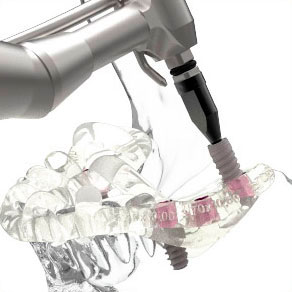
Digital impression system designed by Dr. Luis Cuadrado in collaboration with Ziacom.
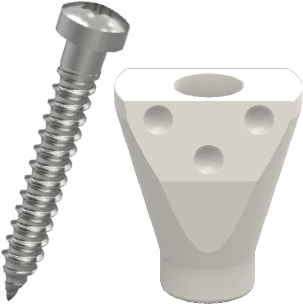
Digital Arch acts as a fixed reference structure that aids alignment and overlay of the scans obtained using an intraoral scanner, in different clinical situations in one single patient.
System
1.0
Torx connection: facilitates insertion and removal once the treatment is finalised
2 mm self-tapping body that facilitates placement and improves stability.
Length of active section: 10.50 and 12.50mm
Self-piercing tip to facilitate insertion
Its optimised dimensions aid acquisition during intraoral scanning procedures.
Made with PEEK
1.0 Removable
Di²gital Arch 1.0 Fixation screw + Di²gital Arch 1.0 ZiaCam Scanbody The Di²gital Arch 1.0 fixation screw serves as a reference to align the virtual models from the intraoral scan of one patient and recreate the clinical condition prior to a dental treatment, while the Di²gital Arch 1.0 ZiaCam Scanbody ensures that all the different digital files taken with the intraoral scanner are aligned.
System
2.0
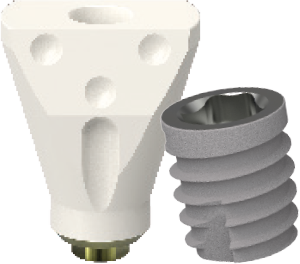
A modified hexagonal connection allows the same Scanbody position to be accurately replicated.
Reduced lengths and diameters: allow it to be placed in various clinical situations.
Manufactured in Zitium Titanium (grade 4 titanium) with Titansure surface treatment.
Alignment zone: allows alignment between different virtual models in CAD software.
Optimised dimensions: aids acquisition during intraoral scanning procedures.
Machined base for modified hex connection: allows the maximum position in the connection to be accurately repeated.
Made with PEEK grade 5 ELI titanium (medical use) Ri 6Al 4V.
2.0 Fixed - Removable
Di²gital Arch 2.0 Microimplant + Di²gital Arch 2.0 ZiaCam Scanbody The Di²gital Arch 2.0 microimplant allows the same reference structure to be maintained when aligning the various virtual models taken during the various stages of treatment in the CAD software. It also recreates the conditions prior to the surgical or prosthetic procedure and aids the preparation of the provisional or final prostheses.
Both systems are indicated for digital impression taking for:
Copying previous clinical conditions to transmit the patient’s aesthetic and function in cases of partial or full exodontia.
In the immediate fully digital treatment of the completely edentulous patient.
Mock-up copying and tooth morphology wax-up for crowns, veneers and bridges on natural teeth.
Copying of provisional prostheses to the work file to create the final prosthesis.
Copying in implant rescue procedures.
Copying of dentures: partial, full, fixed and removable.
Cases of guided surgery and prostheses in completely edentulous patients.

 Skip to content